Insights
Building Playgrounds That Survive a Wellington Winter
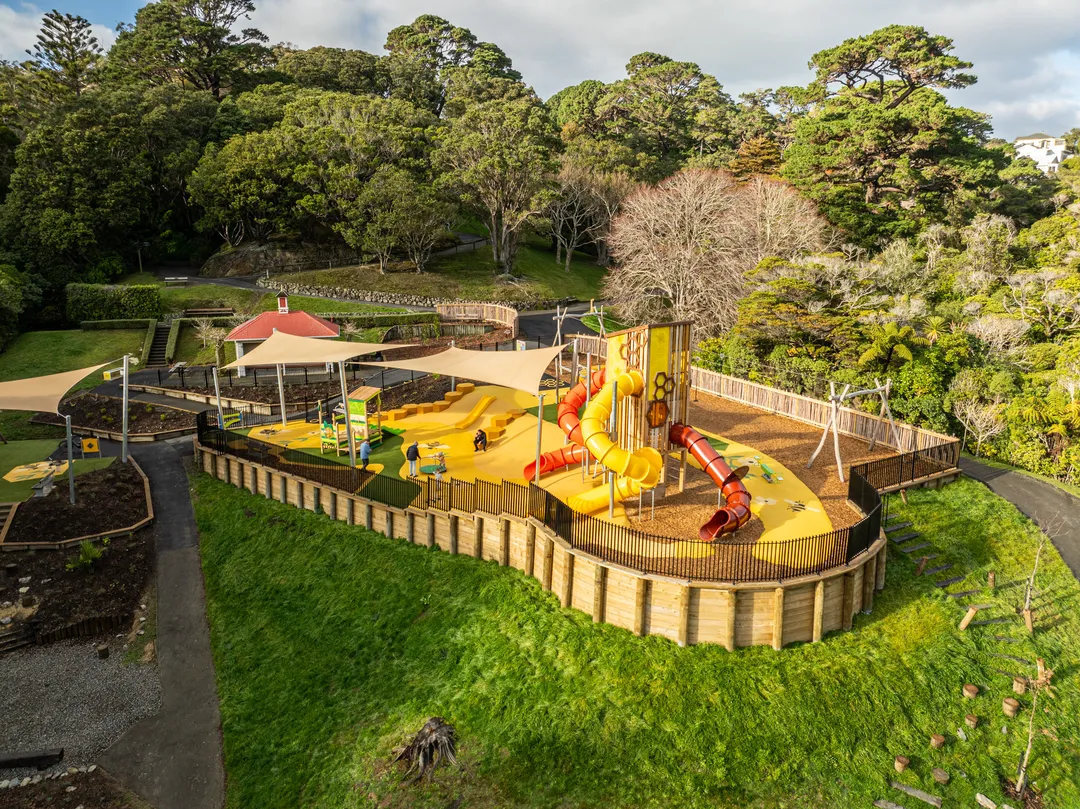
A playground looks simple from the outside. A slide, some climbing, a soft surface, done. The reality of building one that still looks and works well after five Wellington winters is a lot less simple, and most of the decisions that matter are made long before the first piece of equipment goes in.
It starts with the ground. Wellington sites are rarely flat and rarely dry, so we spend real time on drainage, sub-base and levels. Water that is allowed to sit under a play surface will shorten its life faster than any amount of use by children. Getting the falls and the drainage right is invisible work that decides how the whole space ages.
Then there is the surfacing. We build to the New Zealand playground standard, NZS 5828, which sets fall heights and impact-attenuation requirements for good reason. We choose surfacing that meets those numbers and also copes with the local climate, because a surface that performs beautifully in a catalogue photo is not much use if it goes hard and slick through a cold, wet winter.
Equipment and fixings are specified for the environment, not just the budget. Coastal and exposed sites get corrosion-rated hardware and finishes that hold up to salt and wind. We would rather spend a little more on the parts nobody notices than replace a rusted fixing two years early.
Finally, we build for the people who look after the space. Clear documentation, sensible access for inspection and maintenance, and materials that can be repaired rather than fully replaced all mean the asset owner spends less over the life of the playground. A play space is a long-term piece of community infrastructure, and we build it like one.