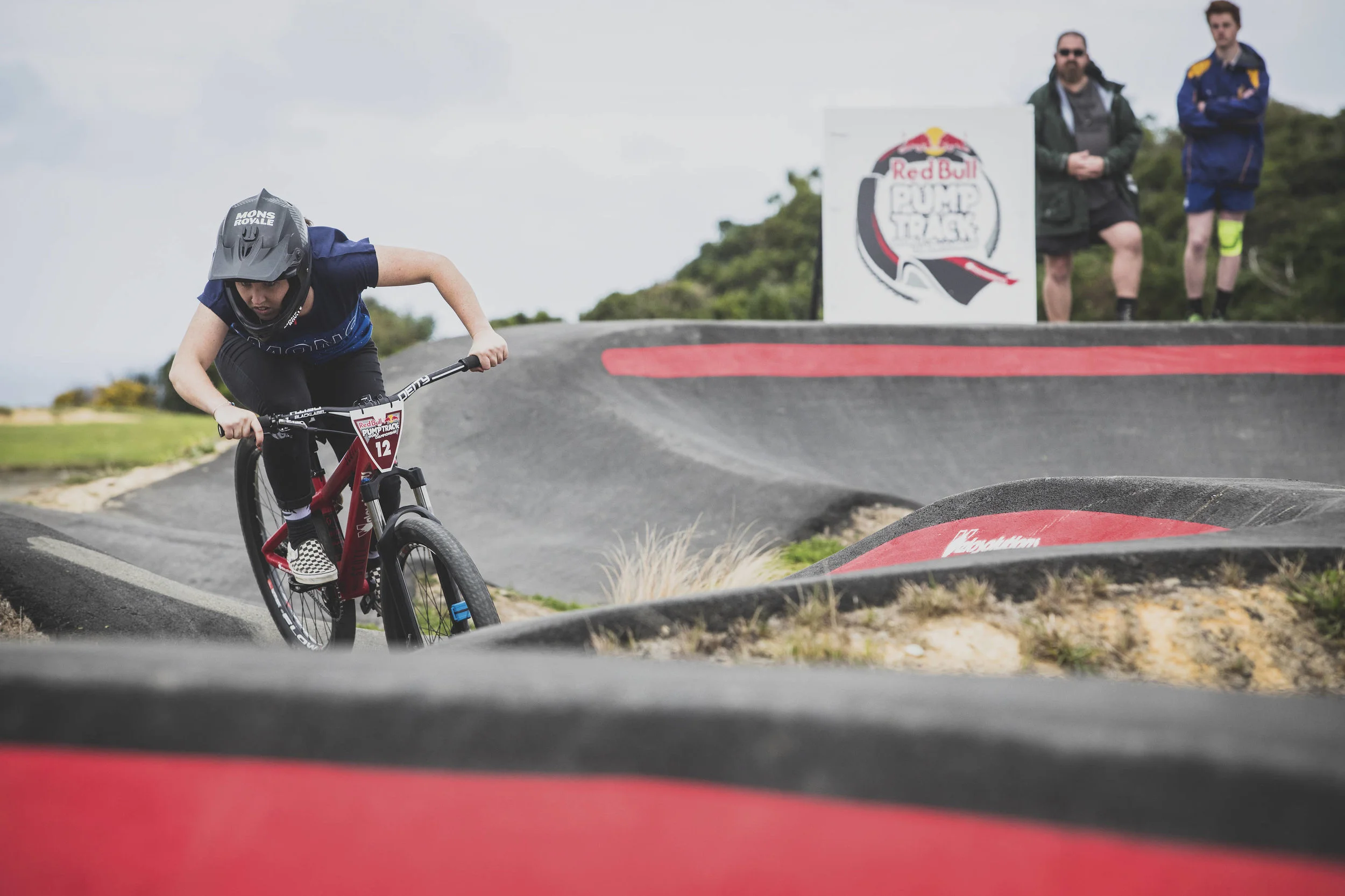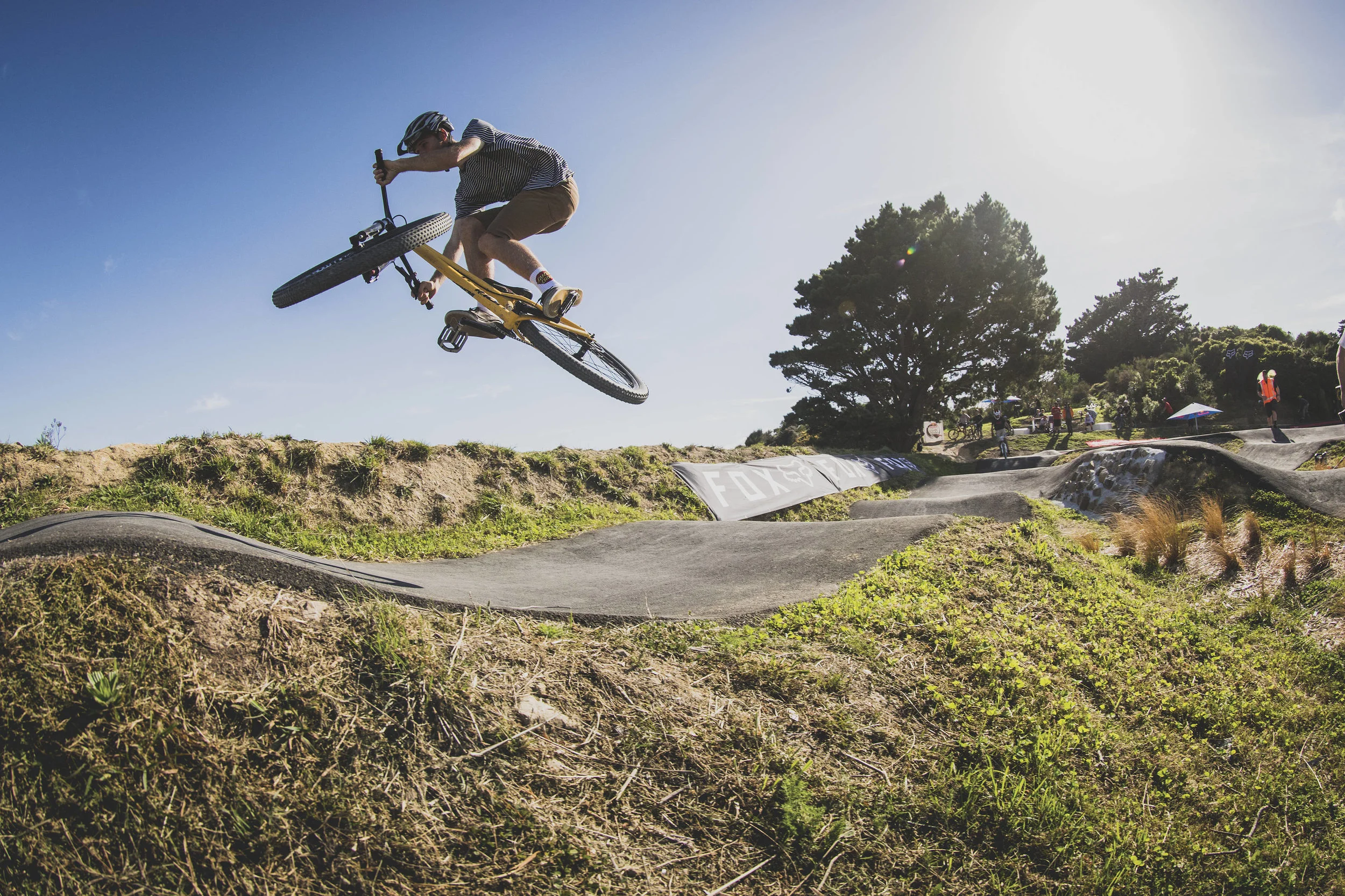
Pump Tracks. Jump Lines. Trail Networks.
Pump tracks, skills areas, jump lines and trail networks, shaped to move more people and keep them coming back. Built to hold a line through wind, rain and years of wheels.
41.2865 S / 174.7762 E
Why the line matters
Anyone can grade a loop of dirt and call it a pump track. Getting the rhythm right, the berm that carries speed instead of killing it, the jump that lands where the rider expects, the skills area that grows with a kid instead of scaring them off, that takes shaping experience most contractors never build.
We build bike facilities the same way we build every public space: read the site, respect the terrain, and put the work in where nobody will ever see it, the compaction, the drainage, the base course, so the part everybody does see keeps its shape for years.
What we build
On the ground
The pump track and the jump line are built by the same crew, on the same site visit, so the transition between them rides the way it looks on the plan. No handoff, no mismatched grade where one contractor's work meets another's.
Pump track
Berms and rollers shaped so momentum carries the rider around the loop, not a flat straight the rider has to pedal through.
Jump line
Take-offs and landings graded to a consistent line, so the jump reads the same on lap one and lap fifty, in the dry and after rain.
How we build it
Every line starts on-site, not on paper. We walk the ground, read the fall, the drainage, the sightlines, before a single berm is shaped.
Berms, rollers and jump lines are built so momentum carries the rider, not the pedals. Flow is a measurement, not a feeling.
Compacted base courses and durable surfacing so the line holds its shape through a Wellington winter, not just opening day.
Skills areas step up in difficulty deliberately, so a first-timer and an experienced rider both have a line that fits, and neither one is stuck riding the wrong line.
Tell us about the space you have and the riders it is for.
Work With Outsiders